An email list is a group of people who ask you to send them emails. This article shows a simple way to build one for affiliate marketing.
Affiliate marketing means telling people about a product through a special link. An affiliate link is that special link.
An affiliate product is a product you tell people about through the affiliate link. The link tells the company that you referred the person to them. If that person buys, the company may pay you.
1. Quick Answer
| To build an email list for affiliate marketing, start with one group of people and one problem you can help them solve. Give people a clear reason to join your list, such as a short guide or a useful weekly email. Make one simple place where people can join, send the help you promised straight away, and then send a few useful emails. Mention an affiliate product only when it helps the same people with the same problem. Do not buy or copy email addresses. Choose an email service only after you know what you need it to do. |
2. Why an Email List Can Help You Keep Helping Readers
A person may read one helpful article and then leave. An email list gives that person a choice to hear from you again if more help would be useful.
If the person wants more help later, you can send useful emails about the same problem. Later, you may mention a product that truly helps with that problem.
Email is not right for every way of promoting affiliate products. Use it only when you can keep helping the same people over time.
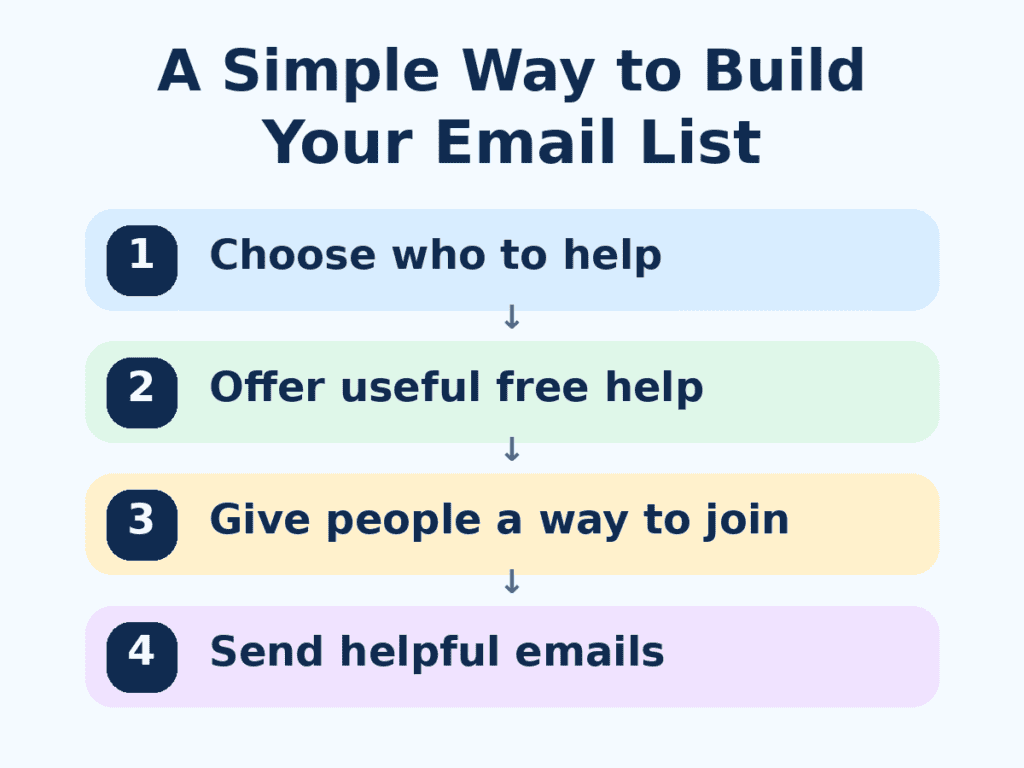
First decide who you will help and what you will keep teaching. Then build the small plan below.
3. Choose Who You Will Help and What You Will Send
Before you make a place for people to join or choose a tool to send emails, decide who you want to help. The people you want to reach and help are your audience.
Do not invite everyone who wants to make money online. Think about one problem that your emails can help solve.
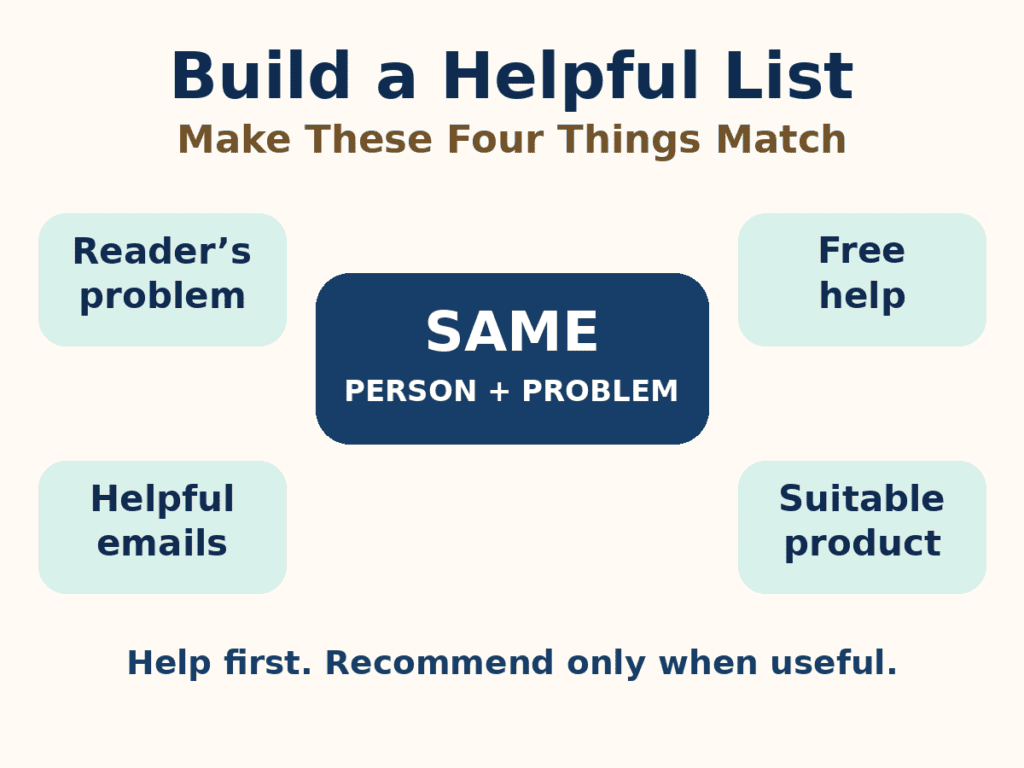
Make sure four things match: the person’s problem, the reason to join, the emails you will send, and any product you may mention.
All four things should help the same person with the same problem.
Ask yourself: What problem will people expect me to keep helping them solve after they join?
Then ask: Will my reason for inviting them, my first emails, and any product I later mention all help with that problem?
4. Give People a Clear Reason to Join Your Email List
People need a clear reason to give you their email address. You can offer a free helpful item, such as a checklist, short guide, or planning sheet.
Some writers call this free item a lead magnet. It simply means a useful free item offered in return for permission to send emails.
You may also offer useful emails instead of a free guide or planning sheet. For example, you may promise one short weekly email that gives a beginner one helpful next step.
Keep the promise clear and make sure you can keep it. Start with one offer, not five guides, three email lessons, and many different places to join.
Ask one question: Would the free item still help if you never mentioned a product? If the answer is no, make the free item more useful before asking anyone to join.
5. Choose an Email Service Only After You Know What You Need
An email service is a tool that keeps the email addresses of people who join your list and sends emails to them. It should also give people an easy way to stop future emails.
Some people call this tool an autoresponder. This means it can send prepared emails by itself after a person joins your list.
At first, you may only need one place to join, a way to send the promised help, and a few first emails. Choose a service after you know those jobs.
Do not pay for a service because it has many extra tools. First check what it costs, whether it is available in your country, and whether its rules allow emails with affiliate links.
6. Give People One Simple Way to Join
A signup form is a small box on a web page where a person types an email address to ask for your emails.
A landing page is a web page with one main purpose, such as asking people to join.
You can place a form inside a helpful article or send people to a landing page. You do not need many pages at the beginning.
Before a person joins, answer three questions: What will I receive? Who is sending it? What kind of emails will I receive later?
Use ordinary words. Do not use an unclear promise of a free gift to hide the fact that you will send later emails.
Keep the form short. An email address is usually enough at the beginning.
Ask for more information only when you can explain why you need it. Add a link to your privacy page, which tells people what you do with their information.
Put the form where it helps a reader who is already interested. For example, put it after a helpful part of an article or on a page that explains the free item.
7. Send What You Promised Right Away
Keep your promise quickly. If a person joins to receive a checklist, guide, or email lesson, make it easy for that person to receive it.
After the person joins, show a short thank-you message that explains what will happen next. Then send the first email with the promised help.
Do not ask people to buy something before they receive the help you promised. Do not make them search through several emails to find it.
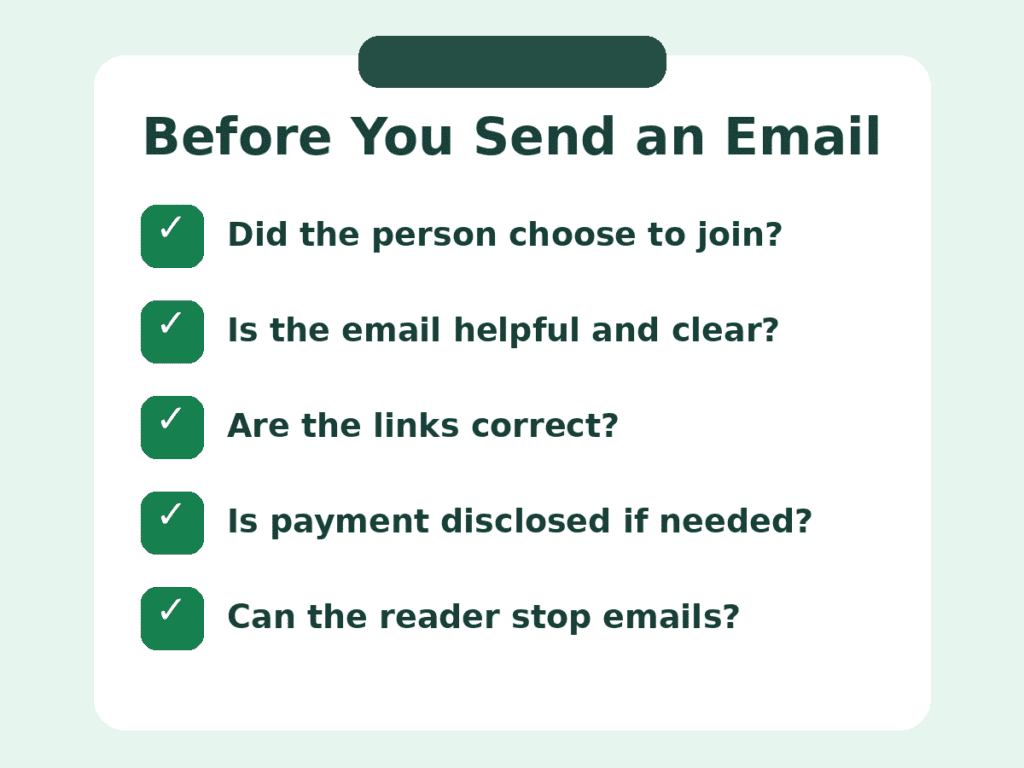
Test your own form before inviting readers to use it. Check the message shown after joining, the first email, the guide or lesson link, and the easy way to stop emails.
8. Send Your First Few Emails
Your first few emails are often called a welcome sequence. A welcome sequence is a short set of prepared emails for people who have just joined your list.
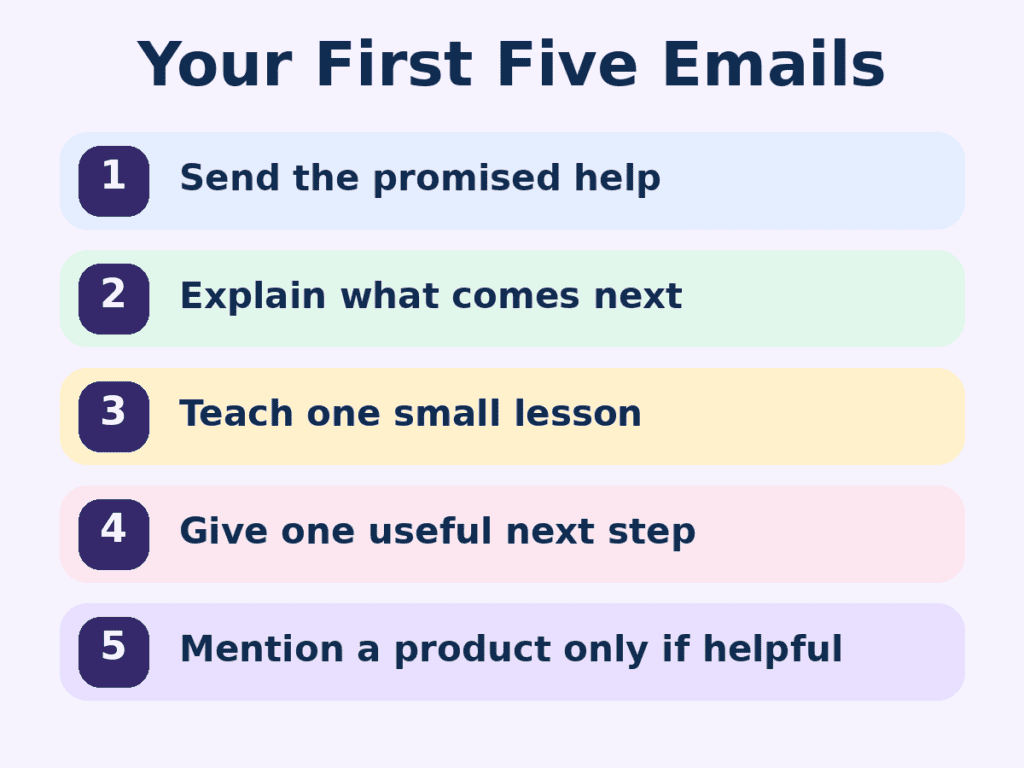
Three to five emails are enough at first. Do not build a long set of emails before you know the first small plan is working.
Each email should have one clear job. The first email sends the help you promised.
The next emails explain what help is coming and tell people how to stop future emails. Then teach one small lesson or give one useful next step.
Only after you have helped first should you mention a product. Mention it only when it helps with the same problem that made the person join your list.
9. Keep Helping Before You Mention a Product
When people join your list, your work does not end. Keep sending useful emails that match the reason they joined.
You may explain a common problem, show a small next action, answer a beginner question, or point to a helpful article. Do not send only article notices or product messages.
An affiliate link tells a company you sent a reader. If the reader buys through that link, the company may pay you.
The money a company may pay you is called a commission. Before you use an affiliate link, ask whether the product will truly help with the reason the person joined your list.
If the product will not help, leave it out. A small list that receives useful help is better than a large list that receives offers that do not help.
An affiliate program is the company’s plan for people who promote its products for payment. Read that company’s current rules before you put its affiliate link in an email.
Clearly say when a company may pay you if a reader buys through a link. This clear statement is called an affiliate disclosure.
If you need more help with this statement, read our separate guide before you send your first affiliate email.
10. Follow the Rules for Emails and Affiliate Links
Build your list only with permission. This means you email only people who chose to receive emails from you.
Never buy or rent email addresses. Renting means paying someone to let you use names from that person’s email list.
Do not copy email addresses from online groups, comments, or another person’s list.
Do not scrape email addresses from websites. Scraping means collecting email addresses without the people’s permission.
Give every reader an easy way to stop future emails. This is usually an unsubscribe link, which is a link a person uses to stop your emails.
When you mention a product with an affiliate link, clearly say that the company may pay you. Do not hide that fact in a long legal paragraph.
United States note:
The United States has rules for emails that tell people about products.
They require true information about who sent the email and what it is about, a real mailing address, and an easy way to stop emails.
The United States Federal Trade Commission (FTC) also says people should clearly say when a company may pay them for telling people about a product.
The FTC is a United States government agency that helps protect people who buy products.
Official United States guidance:
FTC CAN-SPAM Act: A Compliance Guide for Business
FTC’s Endorsement Guides: What People Are Asking
This article gives general information. It does not tell you exactly what the law requires in your situation.
Rules about emails, keeping people’s information private, and affiliate links can differ by country.
Check rules and advice from your country’s government before you send emails that tell people about products.
11. Check What Is Happening, but Keep It Simple
At first, you do not need a difficult report. Check how many people join, which page they join from, whether they click a useful link or reply, and whether they stop emails or complain.
These numbers do not promise income. They help you see whether your promise and emails are helping the right people.
If many people join and then leave quickly, compare the reason they joined with the emails you sent later. If no one joins from a form, check whether the free item is clear and useful.
Leave extra work for later. Do not start by making many groups of readers or many sets of emails that the email service sends by itself.
You do not need many free items, many versions of the same page, or extra sales emails yet. Add something new only when you know the problem it will solve.
12. Example: A Small Email Plan
The example below is made up. It does not tell you to buy any product or promise results.
Suppose Aisha writes helpful articles for beginners who want to grow food in containers on a small balcony.
The people she wants to help need clear help to plan, plant, and care for a small food garden without wasting money.
- Her free item is a one-page First Balcony Food Garden Planning Sheet.
- Her joining page says that people will receive the planning sheet and short beginner gardening lessons.
- Her first email sends the planning sheet. The next three emails explain containers, a few starter plants, and common watering mistakes.
- Only later, if a product truly helps with a lesson, she may explain why it helps and say if its link may earn her money.
Aisha did not make many downloads, a long string of sales emails, or product links that did not help with the same problem. She started with one group of people and one useful promise.
13. Common Mistakes to Avoid
- Trying to collect every possible email address. Invite only people who need help with the problem you teach about.
- Using a free item that does not match later emails. Make the free item match the help and any product you may later mention.
- Buying, scraping, or copying email addresses. Build your list only when people choose to join.
- Asking people to buy before you send the promise. Send the promised help first. Then teach and help before you mention a product.
- Choosing expensive email software before you know what you need. Write down the small jobs first. Then compare email services when you need one.
- Hiding the way to stop emails or hiding possible payment from a link. Make both easy to notice and understand.
14. Practical Action: Make Your First Small Plan
Before you choose an email service or design a page, write the seven answers below in a notebook or document. Keep the answers short and clear.
1. The group of people I want to help is: ________.
2. The problem my emails will help solve is: ________.
3. My free item or useful email promise is: ________.
4. My first helpful email will be: ________.
5. People can join from this form or page: ________.
6. My first five emails will send the promise, explain, teach, help, and mention a product only when it helps.
7. Before I send an affiliate link, I will read the company’s email rules and clearly say if the link may earn me money.
When you can answer those questions, you know what your email service must do. Compare services only after you know those jobs.
15. Key Points to Remember
• Build an email list only from people who chose to receive your emails.
• Start with one problem, one clear promise, and one simple way to join.
• Send the promised help right away. Then use your first few emails to teach and help.
• Choose an email service only after you know what you need it to do.
• Mention an affiliate product only when it helps with the reason the person joined your list.
• Make the way to stop emails and any statement about payment from a link easy to find.
• Check what happens, then add extra work only when you know what problem it will solve.
| Optional next step for true beginners If you are still new to affiliate marketing, the Free Affiliate First 7 Days Kit can help you organize your first steps. It is optional; this article has already given you the full small email plan to begin with. |